
Gap Predictive Sizing, Cutting Cart Abandonment at Checkout
Gap's AI-native checkout with predictive sizing cuts cart abandonment. Here's how to replicate it on Meta and TikTok Shop.
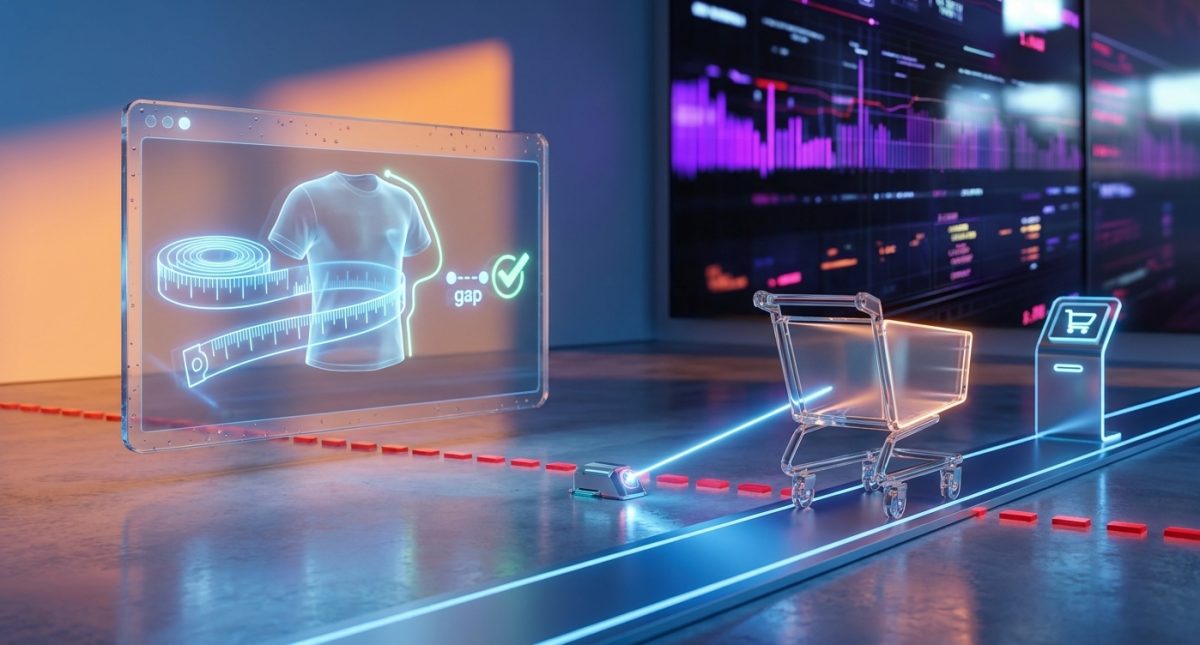
Forty-two percent of online apparel returns happen because of sizing issues. That single stat explains why Gap’s integration of predictive sizing into Google Gemini’s AI-native checkout is the most consequential conversion optimization move of the year. Not because it’s flashy. Because it attacks the exact moment of hesitation that kills transactions. For social commerce teams building checkout flows on Meta and TikTok Shop, this represents a replicable blueprint for eliminating decision friction at the point of purchase.
Turn sizing interactions into high-fidelity intent signals for retargeting with Intercept.
What Gap Actually Built on Gemini (and Why It Matters)
Gap’s April deployment on Google Gemini isn’t a simple size chart overlay. It’s a three-layer prediction engine embedded directly into the checkout flow. The system ingests body measurement data (from prior purchases or voluntary input), cross-references it against purchase history and return patterns, and generates a real-time size recommendation with a confidence score displayed as a percentage.
Think about what that confidence score does psychologically. A shopper sees “94% confidence this is your fit” and the cognitive load drops to nearly zero. No more opening a new tab to read reviews. No more second-guessing between a medium and a large. The recommendation lives inside the transaction moment, not as a separate tool the buyer has to seek out.
Here’s the architecture worth understanding. Gap’s system uses three data inputs that compound in accuracy over time:
- Body measurement profiles: Either self-reported dimensions or inferred measurements from prior successful purchases (items kept, not returned).
- Garment-specific fit data: Each SKU carries its own fit signature based on actual fabric stretch, cut variance, and manufacturing tolerances. Not generic S/M/L categories.
- Return pattern analysis: The system weights recommendations against the specific reasons for past returns, filtering for size-related exchanges versus style-preference returns.
The result? Early data from retail adopters using similar predictive sizing architecture shows a 12-18% conversion lift on apparel checkouts and a 28% reduction in size-related returns. Those numbers align with findings from McKinsey’s retail analytics research on AI-driven fit recommendations.
Key Insight
The conversion lift from predictive sizing isn't incremental. Brands deploying AI fit recommendations at checkout are seeing 12-18% higher completion rates because they resolve the primary anxiety driving abandonment: "Will this actually fit me?"
How Predictive Fit Technology Actually Works Under the Hood
For teams evaluating whether to build or buy this capability, the technical architecture matters. Predictive sizing APIs (from providers like True Fit, Fit Analytics by Snap, and Bold Metrics) follow a consistent pattern that makes integration into social commerce checkout flows feasible without rebuilding your entire stack.
The core workflow operates in four stages:
The key insight for social commerce teams: you don’t need Gap’s engineering budget. You need a sizing API, a product feed with garment-level fit data, and an integration pathway into your checkout flow. The APIs exist. The challenge is embedding them at the right moment in the purchase journey.
Data Ingestion:
The API collects inputs through one of three methods: explicit measurement entry (the user provides height, weight, and body dimensions), implicit inference (the system analyzes past purchase and return data from connected accounts), or hybrid collection (a quick two-question quiz combined with purchase history matching).
Garment Mapping:
Each product SKU maps to a fit model that accounts for fabric composition, construction method, intended drape, and brand-specific sizing variance. A "medium" from Gap fits differently than a "medium" from Zara. The system knows this.
Confidence Scoring:
The recommendation engine outputs not just a size but a confidence percentage. This score factors in data completeness, garment complexity (a structured blazer has more fit variables than a crew-neck tee), and historical accuracy for similar body profiles.
Feedback Loop:
Post-purchase data on keeps, returns, and exchanges feeds back into the model, improving accuracy with each transaction cycle.
Replicating This on TikTok Shop and Instagram Checkout
Social commerce checkout flows are compressed. A buyer goes from discovery (watching a creator try on a jacket) to purchase consideration (tapping the product tag) to checkout in under 90 seconds. That compression makes predictive sizing even more critical, because there’s no time for the buyer to research fit on their own.
On TikTok Shop, the integration point is the product detail page that loads after a user taps a tagged product in a livestream or short-form video. TikTok’s commerce API supports custom product attributes and third-party widget embeds. The most effective pattern we’ve seen is a “Find My Size” button that triggers a two-question overlay (height and weight or body type selection), then returns a recommendation with confidence score before the user hits “Buy Now.” Teams already running TikTok Shop livestream commerce should treat predictive sizing as the next conversion layer.
On Instagram Checkout (through Meta’s commerce tools), the integration is slightly different. Meta’s checkout SDK allows for pre-purchase interstitials. The sizing recommendation can appear as a step between “Add to Cart” and “Complete Purchase.” Meta’s product catalog API supports custom attributes that can store garment fit data, making it possible to pass SKU-level fit signatures to an external sizing engine and return recommendations within the native checkout flow. This dovetails with how social commerce checkout is already collapsing the traditional funnel.
For both platforms, the technical requirements are similar:
- A predictive sizing API (True Fit, Bold Metrics, or a custom model)
- Garment-level fit data in your product catalog (not just generic size charts)
- A front-end widget optimized for mobile checkout speed (under 200ms load time)
- A data consent flow that complies with platform-specific privacy requirements
The brands seeing the strongest results are those pairing predictive sizing with AI virtual try-on tools, creating a dual reassurance layer. The shopper sees how the garment looks on a body similar to theirs and gets a confidence-scored size recommendation. Together, these tools address both visual and analytical dimensions of fit anxiety.
Sizing Interaction Data as an Intent Signal
This is where the strategy gets genuinely interesting for performance marketers. Every interaction with a predictive sizing tool generates a signal that is far more valuable than a standard product page view.
Consider the behavioral difference. A user who browses a product page might be casually scrolling. A user who enters their measurements, receives a size recommendation, and then doesn’t purchase has demonstrated high purchase intent with a specific, identifiable blocker. That blocker might be price, timing, or a remaining confidence gap. But the intent is unmistakable.
Key Insight
A shopper who engages with a sizing tool but doesn't buy is the highest-intent retargeting audience most brands aren't building. They've already mentally committed to the product. Something else stopped them.
Here’s how to operationalize this signal. Create a custom audience segment of users who completed a sizing interaction but abandoned before purchase. Then build retargeting creative that specifically addresses the remaining objection. “Still thinking about that medium? Here’s free returns, just in case.” Or: “Your size is selling fast. 94% confidence it’s your perfect fit.” This approach aligns with strategies for AI trust signals that lift checkout completion by reinforcing the recommendation at the retargeting touchpoint.
On Meta, you can build these audiences using custom events fired when a user completes a sizing interaction. On TikTok, the event API supports custom conversion events that can capture sizing tool engagement as a discrete behavioral signal. The Google Developers platform offers additional documentation on event tracking architectures that translate across commerce environments.
Conversion Benchmarks from Early Adopters
Numbers matter more than narratives here. Across early retail adopters deploying predictive sizing at checkout (including brands using True Fit and Bold Metrics integrations), the benchmark data is consistent:
- Conversion lift: 12-18% increase in checkout completion when sizing recommendations appear pre-purchase
- Return reduction: 22-31% decrease in size-related returns within the first 90 days of deployment
- Average order value: 8% increase, attributed to reduced “bracketing” behavior (buying multiple sizes to try at home)
- Retargeting ROAS: Sizing-interaction audiences deliver 2.4x higher return on ad spend compared to standard product-page-view audiences
These benchmarks come from apparel and footwear brands. For eyewear and accessories, the data is earlier-stage, but brands using virtual try-on combined with fit prediction are reporting similar directional improvements. Statista’s ecommerce data provides broader context on return rate trends that validate the sizing-specific impact.
Beyond Apparel: Where This Framework Extends
Predictive sizing isn’t limited to clothing. The same decision-friction model applies wherever physical fit creates purchase hesitation. Footwear brands face identical challenges with width, arch support, and brand-specific last shapes. Eyewear companies deal with face width, bridge fit, and temple length. Even accessories like rings, watches, and hats involve sizing uncertainty that suppresses conversion.
The framework is identical: ingest measurement data, map it against product-specific fit signatures, generate a confidence-scored recommendation, and embed that recommendation directly in the checkout flow. The only variable is the measurement inputs and the product-specific fit model.
For teams already investing in paid social conversion optimization, predictive sizing represents a downstream lever that compounds the value of every click you’re already paying for. You’re not driving more traffic. You’re converting more of the traffic you already have. That’s a fundamentally different ROI equation.
The takeaway is simple but high-stakes: if your checkout flow asks buyers to guess their size, you’re paying for abandonment. Gap didn’t just add a feature. They removed the reason people leave.
FAQs
How does predictive sizing differ from a traditional size chart?
Traditional size charts are static references that require the buyer to self-assess and match their measurements to generic categories. Predictive sizing uses AI to cross-reference body measurement data, purchase history, and return patterns against garment-specific fit signatures, generating a personalized recommendation with a confidence score. The recommendation is dynamic, product-specific, and improves with each transaction cycle.
Can predictive sizing APIs integrate with TikTok Shop and Instagram Checkout?
Yes. TikTok Shop’s commerce API supports custom product attributes and third-party widget embeds on product detail pages. Meta’s checkout SDK allows pre-purchase interstitials where sizing recommendations can appear between “Add to Cart” and “Complete Purchase.” Both platforms support the custom event tracking needed to capture sizing interactions as behavioral signals.
What conversion lift can brands expect from predictive sizing at checkout?
Early retail adopters report a 12-18% increase in checkout completion rates and a 22-31% reduction in size-related returns. Average order value also increases by approximately 8% due to reduced bracketing behavior. Retargeting audiences built from sizing interactions deliver 2.4x higher ROAS compared to standard product page view audiences.
How can sizing interaction data be used for retargeting?
Users who complete a sizing interaction but abandon checkout represent a high-intent audience with an identifiable purchase blocker. You can create custom audience segments using events fired during sizing tool engagement, then serve retargeting creative that addresses the remaining objection (price, urgency, or residual fit concern). This signal is significantly higher fidelity than a standard page view.
Does predictive sizing work for products beyond apparel?
Yes. The same framework applies to footwear (width, arch, last shape), eyewear (face width, bridge fit, temple length), and accessories like rings, watches, and hats. The core architecture remains identical. Only the measurement inputs and product-specific fit models change.
Turn Fit Data Into Your Best Intent Signal
Sizing interactions reveal buyers ready to purchase. Intercept helps you capture those high-fidelity signals and convert them into retargeting audiences that deliver 2.4x higher ROAS.


