
Event Creator Intent Mapping for Festival Paid Social
Event-creator intent mapping turns Coachella-style creator content into real-time paid social audiences, so you reach buyers before post-event demand fades.
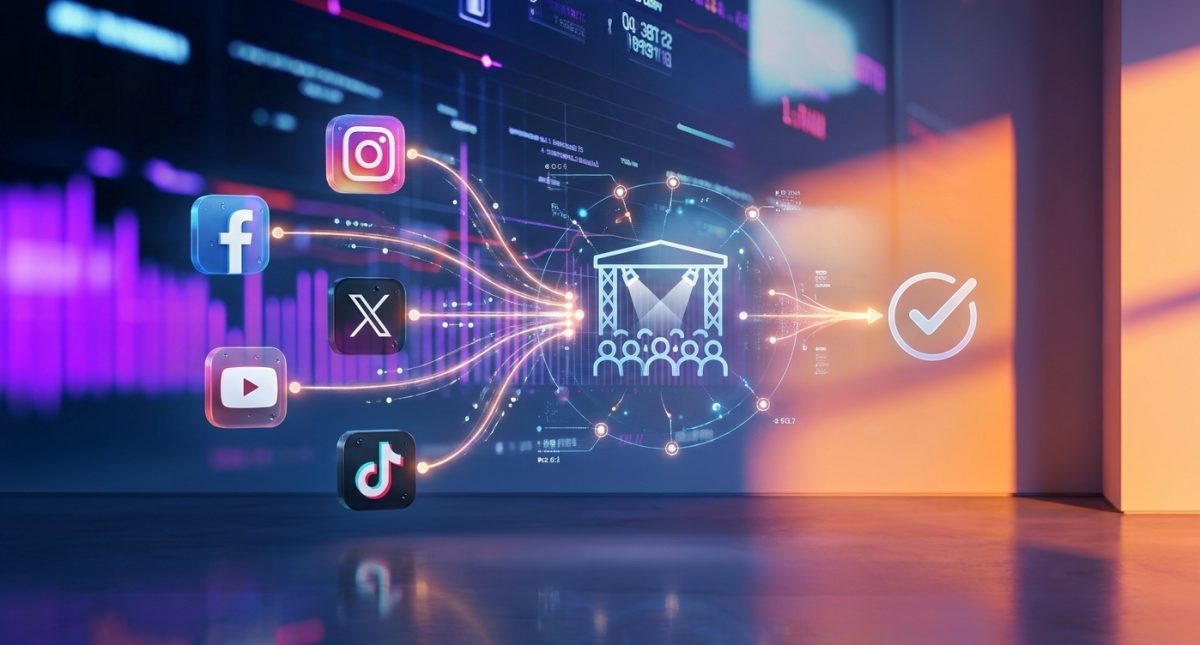
Coachella runs for two weekends. The buying impulse it creates fades faster than that. Most brands still treat festival creator activations as awareness spend, then pay for it with reports full of impressions and very little revenue. There is a better way to run them. Event-creator intent mapping treats creator content at tentpole events as a live feed of event-adjacent purchase intent. You track which posts are making people want to buy, and you send those engagers into paid social while they are still shopping. This article covers the system, the platform plumbing behind it, and how to prove the revenue lift.
Spot which event creator posts spark buying intent and turn those engagers into paid audiences fast.
Why festival creator spend keeps landing in the awareness bucket
Creator volume at Coachella is not the issue. Forbes recently described how creator streams are reshaping the festival, with influencers now driving the festival’s global audience through IRL content and brand deals.
The weakness is in the operating model. A typical festival activation runs like this: fly creators out, brief them loosely, collect posts, then wait two weeks for a recap deck. When the deck arrives, the audience that commented “wait, where are those boots from?” has already bought something else. Or nothing.
Think about who is engaging with a creator’s outfit post on the Saturday night of weekend one. That person is not passively aware of anything. They are halfway through a shopping trip with no checkout in sight.
Key Insight
The problem with event creator content is timing, not reach. Purchase intent peaks while the event is happening. Most brands only start measuring once the event is over.
What event-creator intent mapping actually is
Event-creator intent mapping is a social selling method with three parts. First, you track how fast creators are posting during a tentpole event. Second, you score each post on purchase-adjacent engagement rather than reach. Third, you send the engagers from the highest-scoring posts into paid social campaigns within hours.
Purchase-adjacent engagement does not look like ordinary engagement. A like is a pleasant signal and nothing more. These are the signals that count:
- Product tag taps on shoppable posts, which show someone looking at a specific SKU
- Brand mentions in comments, especially when commenters tag friends
- “Where did you get that” comments and close variants (“link?”, “need this”, “what shade is this”)
- Saves and wishlist actions, which mean the person plans to come back
- Shares to DMs, which often mean someone is asking a friend’s opinion before buying
This builds on what we have seen running micro-creator networks as always-on intent engines. The difference here is compression. A festival weekend packs a month of normal discovery behavior into roughly 72 hours, so the signal is denser and loses value faster.
Platform targeting works at the level of actions, not comment text. Meta and TikTok let you build audiences from people who engaged with a post. They do not let you build an audience from people who wrote “where did you get that” specifically. Comment language has a different job. It tells you which posts to pull engagers from and which products to put in the follow-up ad. That split is the core of the method.
The platform plumbing: what you can capture, and how fast
Before a creator posts anything, check the technical constraints. They decide how quickly your “real-time” pipeline can actually move.
On TikTok, engagement audiences in TikTok Ads Manager can be built from organic videos and LIVE content, and organic video audiences can be based on 2-second views, 6-second views, 100% views, or engagement (likes, shares, comments). Lookback windows for organic videos are 7, 14, or 30 days. The TikTok engagement audience documentation also says you can select up to 50 videos per audience, and an audience needs at least 1,000 people before you can target it. The figure that matters most for event timing is the delay: TikTok says an engagement custom audience can take 24-48 hours to generate. If you wait until Sunday to set it up, you will be targeting people on Tuesday.
Account linking adds another delay. TikTok requires the user account that posted the organic content to be linked to your Ads Manager account through user settings or a Business Center. In practice, creator authorization has to be finished before the event, not during it.
On Instagram, creator audience sharing for partnership ads lets a brand target people who have engaged with the creator’s account. Combine that with whitelisting (the setup is covered in our guide to creator whitelisting deals) and you can run a creator’s best-performing festival post as a partnership ad aimed at that creator’s own warm audience. That is a much warmer audience than a lookalike built from your customer file.
A replicable framework for any tentpole event
The same system works for Coachella, Paris Fashion Week, the Monaco Grand Prix, or a major sneaker drop. What changes is the calendar and the product set. Here is the build:
Step four is where most agencies stall, because tracking dozens of creators by hand on a festival weekend does not work. That is the gap Intercept was built for. Its AI flags intent-bearing conversations as they happen, so your team is acting on scored posts instead of scrolling feeds at 2 a.m. The same thinking applies to shoppable tags in Reels: tag interactions are among the clearest signals you will get.
Do your activation calendar and your paid media calendar as one document. If a creator post has no campaign shell waiting for it, its intent will go uncaptured.
1
Build the pre-event activation calendar:
Map every creator’s expected posting windows against the event schedule (headliner sets, runway shows, qualifying sessions) and attach a matching paid social trigger to each window, so every expected post already has a campaign shell waiting for it.
2
Lock authorization and tagging in advance:
Finish creator account linking, partnership ad permissions, and product catalog tagging before travel day, because none of these approvals move quickly once the event starts.
3
Define your intent lexicon:
Write down the comment phrases, emoji patterns, and question formats that signal buying interest in your category, including slang specific to the event audience.
4
Monitor content velocity in real time:
Track posting cadence and engagement acceleration for each creator in hourly buckets, and flag any post whose intent-comment ratio beats the creator’s baseline.
5
Score and promote:
Rank flagged posts by purchase-adjacent engagement density, then put the top performers forward as source content for engagement audiences and as partnership ad creative.
6
Fire paid triggers in waves:
Launch retargeting to engagers of the top posts first, then widen to lookalikes, and match ad creative to the exact product people were asking about.
7
Set a decay cutoff:
Pick a date after the event when you move budget from event-exposed audiences back to always-on prospecting, and adjust it based on how quickly response falls off.
Measuring lift: event-synchronized versus always-on
“Did it work?” is the wrong question. Ask how much revenue the event-synchronized pipeline produced compared with what the same creators and budget would have produced on your standard always-on cadence.
To answer that with confidence, use three controls.
A holdout audience. Take a random slice of engagers from your top posts and exclude them from retargeting. The difference in conversion rate between targeted and held-out engagers is your incremental lift. Platform-reported ROAS will overstate it every time.
A matched always-on comparison. Compare event-period results with the same creators’ non-event content from the prior quarter, run through your usual paid amplification. Normalize for spend. Event content often wins on cost per acquisition but loses on average order value, or the other way around. Track both.
A decay curve. Plot conversion rate by days since engagement. This shows how long event-adjacent intent actually lasts for your category. Fashion and beauty usually fade fast. Higher-consideration purchases, such as F1-adjacent watches or travel, can last much longer. Once you have this curve, use it to set the decay cutoff for the next event.
Connecting this back to revenue is what turns it from a creative experiment into a budget line. Our work on outcome-based social listening covers the attribution model in more detail, and the creator attribution dashboard approach shows how to keep tracking these cohorts for lifetime value instead of stopping at first purchase.
Where teams get it wrong
A few failure patterns show up again and again.
They choose source posts by reach. A viral post full of generic hype comments will usually do worse as an audience source than a smaller post where many of the comments ask where something is from.
They run generic follow-up creative. If someone engaged because of a specific jacket, showing them a brand sizzle reel wastes the signal. Lead with the product they asked about.
They forget about F1 and Fashion Week. Coachella gets the coverage, but the same method arguably works better at events with fewer brands competing for the same feeds. Fewer brands means cheaper attention.
Your next step: choose the next tentpole on your calendar, list every creator you plan to activate, and confirm that each of them has account linking and partnership ad permissions finished at least two weeks before the event starts.
Frequently asked questions
What is event-creator intent mapping?
It is a social selling method that tracks creator content during tentpole events in real time, scores posts by purchase-adjacent engagement such as product tag taps, saves, and “where did you get that” comments, and sends engagers from the top posts into paid social campaigns while they are still shopping.
Can I target people based on specific comments they left?
Not directly. Meta and TikTok build engagement audiences from actions such as views, likes, shares, and comments, not from what a comment says. Use comment language to decide which posts to pull audiences from and which products to feature in follow-up ads.
How fast can I retarget event engagers on TikTok?
TikTok says engagement custom audiences can take a day or two to generate and have to reach a minimum size before you can target them. Build audiences early in the event so your retargeting goes live while intent is still high.
Does this only work for music festivals?
No. The framework works for any tentpole event, including Fashion Week, F1 races, award shows, and major sports finals. Only the activation calendar, the intent lexicon, and the product set change.
How do I prove revenue lift versus always-on creator campaigns?
Use a randomized holdout of engagers who are not retargeted, compare results against the same creators’ always-on content with spend normalized, and plot a decay curve of conversion rate by days since engagement.
Capture festival buying intent before it fades
You now have the playbook for turning event creator content into real-time paid social audiences. Intercept scores intent-rich creator posts as the event unfolds, so your team can launch retargeting while buyers are still deciding.


