
AI Vibe-Coding for Creator Briefs at Scale
Learn how leading brands use AI vibe-coding tools to scale UGC production across hundreds of creators without losing brand voice consistency.
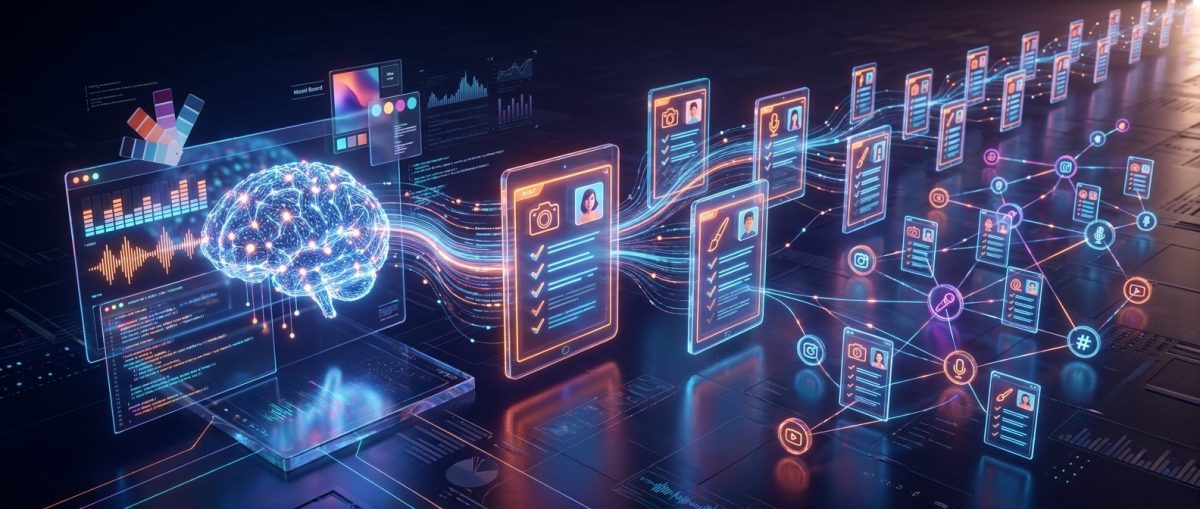
A recent Statista survey found that 78% of DTC brands working with more than 50 creators cite “brand voice inconsistency” as their top operational pain point. Not discovery. Not cost. Tone drift. The real bottleneck in scaling UGC isn’t finding talent. It’s ensuring creator number 247 sounds as on-brand as creator number one. That challenge has given rise to a new discipline: AI-assisted vibe-coding for creator briefs, a workflow that extracts a brand’s tonal DNA and translates it into personalized, creator-specific instructions at scale.
Intercept helps brands identify high-intent audiences before competitors even notice the signal.
What Is Vibe-Coding, and Why Does It Matter Now?
Vibe-coding is the process of using generative AI to analyze a brand’s existing content library and extract quantifiable tonal attributes. Think of it as a fingerprint for voice. The AI identifies humor registers (dry, absurdist, wholesome), visual pacing preferences, vocabulary density, emotional arc patterns, and even sentence rhythm. These extracted parameters become a “tonal codex” that can be mapped onto any individual creator’s natural style.
Why now? Because the creator economy has hit an inflection point. Brands running distributed networks of 100+ creators can no longer rely on PDF style guides and Slack threads to maintain consistency. The volume is too high, the turnaround too fast. Manual brief writing for each creator simply doesn’t scale. Tools like Jasper, Writer, and emerging purpose-built platforms are filling this gap by offering tone-matching capabilities that go far beyond basic brand guidelines.
This isn’t about making every creator sound identical. That would defeat the purpose of UGC entirely. The goal is to define an acceptable tonal corridor, a range within which creators can express their authentic voice while staying aligned with the brand’s emotional and linguistic identity. The difference is subtle but transformative.
Extracting Tonal DNA: The Foundation Step
Every vibe-coding workflow starts with the same question: what does this brand actually sound like? Not what the brand deck says it sounds like. What the top-performing content actually sounds like.
Here’s the extraction process most leading CPG and DTC teams follow:
Teams that skip the extraction step and try to manually define their tone in abstract terms (“we’re fun but professional”) end up with vague briefs that produce vague content. The data-driven approach eliminates guesswork. For brands already using NLP sentiment scoring for social proof, extending those capabilities to tonal analysis is a natural evolution.
Audit your content library:
Pull 200-500 pieces of existing content across formats (ads, organic social, email, creator UGC that performed well). Prioritize content from the last 12-18 months that exceeded engagement benchmarks.
Run NLP-based tonal analysis:
Feed the corpus into an AI tool that scores each piece across tonal dimensions. Common axes include formality (0-100), humor type classification, emotional valence, reading level, and vocabulary specificity. Tools like IBM Watson’s Tone Analyzer or custom GPT-based pipelines can handle this.
Identify tonal clusters:
The AI will surface patterns. You might discover that your highest-converting TikTok ads cluster around a "casual, slightly sarcastic, mid-vocabulary" profile while your Instagram Reels skew "warm, aspirational, minimal jargon." Both are valid brand expressions. The codex should capture both.
Build the tonal codex document:
This is a structured data file (not a PDF) that quantifies your brand voice across 8-15 dimensions. It becomes the reference input for all downstream brief generation.
From Codex to Creator-Specific Briefs
This is where the magic happens. Once you have a tonal codex, the AI can generate briefs tailored to each creator’s natural style. The system ingests a creator’s recent content (typically 20-50 posts), profiles their personal tonal signature, and then produces a brief that bridges the gap between their voice and yours.
Consider a practical example. Your brand’s tonal codex flags “dry humor with product-benefit anchoring” as a core pattern. Creator A naturally produces high-energy, exclamation-heavy content. Creator B leans into deadpan storytelling. The AI generates two completely different briefs from the same campaign input. Creator A gets guidance to dial back energy slightly and anchor each joke in a specific product feature. Creator B gets encouragement to lean into their deadpan style with suggested punchline structures that mirror the brand’s humor register.
Key Insight
The best vibe-coded briefs don't ask creators to become someone else. They show creators exactly which parts of their natural style already align with the brand, and where to make small adjustments.
This approach dramatically reduces revision cycles. Brands using AI-generated personalized briefs report 40-60% fewer rounds of feedback compared to one-size-fits-all brief templates. The deal structures for creator series become more efficient when both sides start from a shared tonal understanding.
Automated Tone-Match Scoring and Revision Triggers
Generating great briefs is only half the system. You also need an automated quality gate that evaluates submitted content against the tonal codex before it enters the approval queue.
Here’s how the scoring pipeline works in practice:
This level of precision is only possible when both the brief and the evaluation criteria are generated from the same tonal codex. The system is internally consistent, which means creators learn the brand’s voice faster with each submission.
For brands already leveraging creator attribution dashboards, integrating tone-match scores into performance data reveals powerful correlations between tonal alignment and downstream conversion.
Creator submits content:
Video, image, or copy gets uploaded to the platform. For video content, the AI transcribes audio and analyzes visual pacing, cut frequency, and on-screen text separately.
AI runs tone-match analysis:
The submission is scored against the tonal codex across all defined dimensions. Each dimension gets a deviation score measured in percentage points from the ideal range.
Composite score calculation:
The system generates a weighted composite score. Not all tonal dimensions matter equally. Humor register might carry 3x the weight of vocabulary complexity for a particular brand.
Threshold evaluation:
If the composite score falls within the acceptable deviation threshold (typically 15-25% from center), the content passes to human review. If it exceeds the threshold, automated revision notes are generated and sent to the creator.
Targeted revision notes:
Instead of vague feedback like "this doesn’t feel on-brand," the creator receives specific, actionable direction. For example: "Your opening 3 seconds match our energy profile, but the product mention at 0:18 shifts to a testimonial tone that’s 34% more formal than our target range. Try rephrasing in your natural conversational register."
Setting Deviation Thresholds That Actually Work
This is where most brands stumble. Set thresholds too tight and you’ll reject 70% of submissions, frustrating creators and slowing production. Too loose, and you might as well not have a system.
The calibration process should be empirical, not theoretical. Start by scoring your existing top-performing UGC against the codex. The natural variance in that content establishes your baseline. If your best-performing pieces deviate 10-30% from the codex center on average, that’s your starting corridor.
Several nuances matter here. Platform-specific thresholds are essential. TikTok content naturally tolerates higher tonal variance than Instagram feed posts. Audience segment also plays a role. Content targeting Gen Z buyers can often stretch further from center than content aimed at 35-44 professionals. Build separate threshold profiles for each platform-audience combination.
Key Insight
The smartest brands treat deviation thresholds as living parameters. They recalibrate quarterly based on which tonal profiles are actually driving engagement and conversion, not based on subjective brand team preferences.
Multi-Market Tone Adaptation
Global brands face a compounding challenge. Brand voice doesn’t translate literally across cultures. Humor that lands in the US market might fall flat or offend in Germany or Japan. The tonal codex needs regional variants.
The approach that’s gaining traction involves creating a “core codex” that captures universal brand attributes (pacing, emotional arc structure, visual identity) alongside “market codex overlays” that adjust culture-sensitive dimensions like humor style, formality level, and directness. AI tools can generate these overlays by analyzing top-performing localized content from each market, following the same extraction methodology used for the primary codex.
This is particularly relevant for brands using cross-platform sentiment arbitrage strategies, where tonal nuance directly impacts ad performance across different regional audiences.
Does Vibe-Coded Content Actually Outperform?
The short answer: yes, but with caveats. Early data from DTC brands running A/B tests between vibe-coded and free-form creator content shows consistent patterns. Vibe-coded content outperforms on engagement rate by 18-32% and on click-through rate by 12-24%. Conversion rate improvements are more modest, typically 8-15%, suggesting that tonal alignment captures attention and drives consideration more than it directly closes sales.
The more interesting finding is consistency. Free-form content has higher variance. Occasionally a free-form piece massively outperforms everything else. But the median is significantly lower. Vibe-coded content raises the floor without necessarily raising the ceiling. For brands producing content at volume, that floor elevation translates directly into better blended ROAS.
One thing to watch: creator fatigue. Some creators report feeling constrained by highly specific AI-generated briefs. The best operators address this by framing vibe-coding as a collaboration tool, not a compliance mechanism. Let creators see their own tonal profile. Show them where their strengths overlap with the brand. Make the process transparent.
The operational future of distributed creator networks looks increasingly like a content factory powered by tonal intelligence. Brands that invest in building robust vibe-coding systems now will compound their advantage as creator networks scale. The ones still emailing PDF style guides will wonder why their content feels increasingly disjointed. Start with the codex. Build the pipeline. Let the AI handle the translation.
FAQs
What tools can brands use for AI vibe-coding of creator briefs?
Several platforms offer tonal analysis capabilities, including Jasper, Writer, and custom GPT-based pipelines. IBM Watson’s Tone Analyzer provides foundational NLP analysis. Purpose-built creator brief platforms are emerging that combine tonal extraction with automated brief generation and scoring. The best approach often involves combining general-purpose AI tools with custom prompts trained on your specific brand content library.
How many content pieces are needed to build an accurate tonal codex?
A minimum of 200 pieces provides a reliable tonal baseline, though 400-500 pieces produce more stable results. The content should span formats (video, static, copy) and include only material from the last 12-18 months to reflect current brand voice. Prioritize content that exceeded engagement benchmarks, as this represents the tonal profile your audience actually responds to.
Can vibe-coding work for brands with multiple sub-brands or product lines?
Yes, but each sub-brand needs its own tonal codex. The recommended structure is a parent codex capturing shared brand attributes alongside separate child codices for each sub-brand or product line. AI brief generation tools can then reference the appropriate codex based on the campaign’s product focus, ensuring tonal consistency within each product vertical.
What is an acceptable tone deviation threshold for UGC content?
Most brands find that a 15-25% deviation from the tonal codex center point works well as a starting range. This should be calibrated empirically by scoring existing top-performing UGC against the codex to establish a natural baseline. Thresholds should vary by platform and audience segment, with TikTok content typically tolerating higher variance than Instagram or YouTube content.
How do you prevent creator fatigue when using AI-generated briefs?
Transparency is key. Share the creator’s own tonal profile with them so they understand where their strengths naturally align with the brand. Frame vibe-coding as a collaboration tool rather than a compliance mechanism. Allow creators to flag brief elements that conflict with their creative instincts, and build feedback loops that let the system learn from creator input over time.
Scale Your Creator Network With Intent Precision
Vibe-coded briefs keep your brand voice consistent, but the real leverage comes from reaching audiences already showing purchase intent. Intercept identifies those high-intent buyers across social platforms so your on-brand creator content lands in front of people ready to convert.


